It’s not difficult to process an individual bank account statement. If only one PDF file is being processed the manual entry of data is feasible.
Then, you can multiply the task over many businesses, several bank accounts, and multiple statements.
The issue has evolved. The problem changes. The improvement in bank statement conversion does not only mean that you can make one document faster. It is about creating the system that will work as the volume grows.
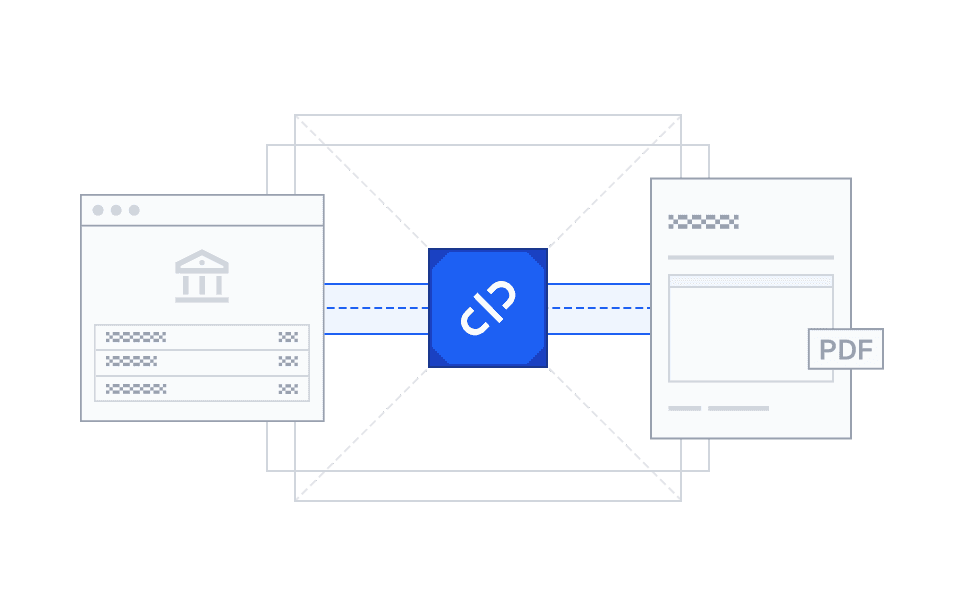
Image credit: docubrew.com
The bottleneck is repetition.
Imagine a company in accounting which receives monthly PDFs from several clients. One uses Chase One uses Wells Fargo, the other Wells Fargo, while others transmit reports from Bank of America, Capital One, Citi, or smaller companies.
Access each PDF file and manually enter each transaction.
A bank statement converter can shift that workflow from transcription toward review. Docubrew can extract the figures of transactions directly from the bank statement, instead of estimating financial value. It’s a structured file that can be examined prior to its use. This distinction is becoming more valuable as document volume grows.
Batch processing can alter the equation
The handling of files in a separate manner is appropriate for occasional conversions. Accounting firms usually have to deal by a totally different situation. Docubrew lets you upload and process multiple statements in one run. The results are accessible separately. The firm is able to work with a large number of documents provided by clients without needing to manually build every transaction table.
Customers can convert their bank statements into CSV format and then examine the information on transactions.
Scanned paper statements can’t be excluded automatically. Docubrew can OCR PDFs that have been scanned. This is useful when the client’s history has the native PDFs as well as scanned documents.
Produce output to support the accounting work in the future.
It’s not the end of the procedure. Many transactions require to be processed.
Docubrew exports CSV, Excel, and QBO. QBO is a choice for a team that needs to export a bank account to Quickbooks. Also, it is available in general spreadsheet format.
Businesses that convert bank statements information into Quickbooks frequently will be able to develop a process more consistent around the receipt of statements, their processing, the checking and extraction of the information, and the preparation of the necessary documents for the accounting workflow.
Human reviews are crucial. Automating repetitive transcription is a possibility to be accomplished, however bookkeepers are still responsible for verifying financial information and also completing accounting tasks.
Client information is a valid basis for its own workflow decisions
The handling of more sensitive client data is linked to greater volumes of document.
Docubrew provides two processing methods. Windows desktop applications perform conversions locally. Files can remain on the computer. Docubrew claims that cloud uploads are secured and the uploaded files as well as transformed files will be automatically deleted after 24 hours.
Accounting practices can select the approach that better fits its requirements for internal handling.
Scale the process but not the repetitive tasks
The increasing use of bookkeeping procedures should lead to more financial documents. The practice should not automatically allow more copy and paste work.
The important question is whether the method that was successful for five clients can be effective for 50 clients.
Standardizing the way statements are reviewed, received and prepared for accounting software can aid firms in creating a workflow designed to manage recurring volumes, rather than using each PDF as the beginning of a new manual project.