A significant contract is won by the manufacturer. While the demands for production have increased, the factory does not have an increase in floors or more experienced workers. A temporary increase in production could be possible, however adding another shift can introduce new labor requirements training, supervision, and quality control.
This scenario reveals the primary purpose for robotic automation. Robotics does not only replace people with machines. If used properly it can alter how manufacturers make use of the resources they have.
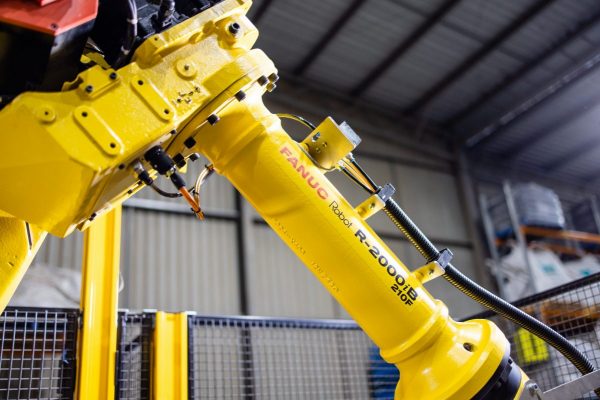
Image credit: automatedsolutions.com.au
Take a look at the seconds that Change Between Products
Manufacturing inefficiency doesn’t need to be a major issue. An operator may spend 15 minutes positioning the item, then 10 seconds applying materials, and then a few seconds more to move it to the next step. For one part it’s not much of a difference. Repeated thousands of times, but those seconds turn into an enormous amount of production time.
Same goes for waste material. The same is true for the waste material.
Companies considering robotic automation Australia projects can benefit from examining these small, repeated losses before deciding what equipment they need. The analysis provided by ASA is designed to pinpoint bottlenecks and quality issues, as along with the waste that can be a problem within a project.
A Robot has to fit the Process Itself
The decision to choose a robot is just one aspect of engineering. The system will also require guarding, tooling and controls, sensors fixtures, conveyors electronic integration, and connectivity with the existing production equipment. Engineers should consider the range, payload, and how the robot will move and interact with its environment.
ASA provides concept development, system design, CAD simulation, and offline programming as part of its strategy to FANUC robotic automation. Engineers can investigate system configurations and estimate cycles before the finished system is installed on the floor of the factory. It’s particularly useful when there’s a finite area or new robotics is required to be integrated with a production line.
The importance of consistency in painting and dispensing
Certain manufacturing processes demonstrate the importance of controlled movements. Imagine coating hundreds or thousands of parts. Making components faster is the desired outcome. From the time of beginning production all the way to the finish the speed, movement of the machine, the distance and the application have to be managed.
ASA has experts who work in the field of dispensing and painting across various industries, including aeronautics and automotive. In these industries, industrial robotic automation can offer repeatable programming while also reducing employee exposure to physical demands or potentially hazardous processes.
Reduced wasted materials and an increase in productivity could be achieved through better management.
Installation of the system isn’t enough. You will require people to maintain it.
Automation is not a complete solution to the need for manufacturing expertise. Automation changes the skills needed for maintaining and operating the manufacturing process.
The employees must know how to operate equipment safely and recognize any abnormalities as well as troubleshoot issues and carry out the correct maintenance. The production requirements can also change, meaning procedures and programs might require modification later.
ASA provides training on site including programming, safety as well as troubleshooting techniques and mechanical and electric maintenance. The company provides servicing as well as support for evaluating the condition of equipment, and dealing with wear throughout the lifetime of the system.
Capacity refers to more than Being able to work faster
For Australian producers, expanding capacity doesn’t necessarily mean buying larger buildings or increasing the amount of labor required to perform repetitive tasks. One of the best questions to ask is whether the existing manufacturing process could be improved.
ASA has created and integrated automation systems in Australia since 2002. We also help with projects overseas. The company’s strategy combines analysis of needs, engineering, simulation, FANUC robot integration, training, and servicing.
Automation is not the goal. A worthwhile system should give manufacturers something tangible in terms of increased reliability that is consistent in quality, more secure processes, lower waste or more capacity from the factory it already operates.